



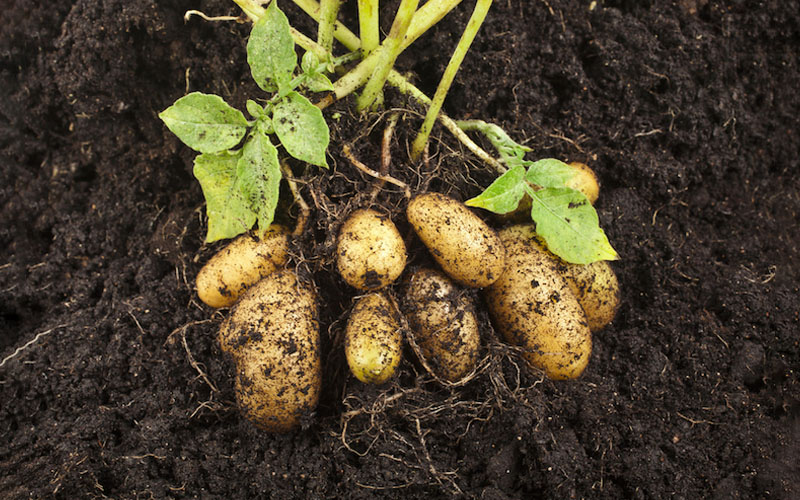
Nutrient deficiencies in potatoes have a direct and serious impact on yield, tuber quality and overall crop health. Deficiencies in key nutrients such as nitrogen, potassium, phosphorus and important micronutrients stunt growth, cause symptoms such as leaf yellowing, curling, internal spots and poor tuber development, and can lead to increased vulnerability to diseases and environmental stresses, ultimately leading to reduced yields and quality if not corrected through targeted fertilization and soil management.
Macro-N (nitrogen) deficiency
Nitrogen deficiency in potatoes causes pale green or yellowing of leaves, starting from older foliage and progressing to all leaves; affected plants are stunted, have thin stems, and premature leaf drop, leading to poor growth, reduced tuber development, reduced yield, and reduced quality; symptoms are often seen as uniform chlorosis and stunted growth throughout the crop.
 |
 |
Kimat’s proposed solution:
Macro-P (phosphorus) deficiency
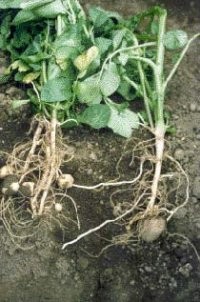
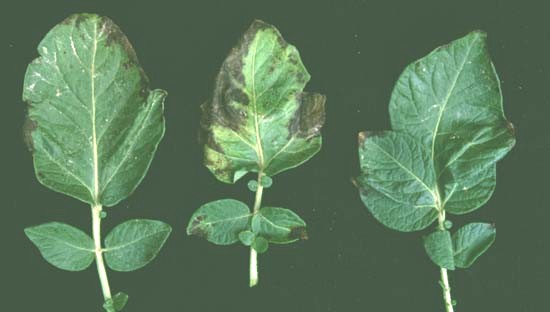
Phosphorus deficiency in potatoes causes stunted growth, thin, vertical shoots, and darker leaves than normal with cup-shaped margins upward and sometimes a purple discoloration, especially on the underside of the leaf or stems; severe deficiency results in poor root development, reduced tuber number and size, and the development of rusty brown spots or streaks inside the tubers, the initial symptoms of which are sometimes difficult to detect but ultimately, if not corrected, are reflected in delayed maturity, reduced yield, and reduced tuber quality.
 |
 |
Kimat’s proposed solution:
Macro-K (Potassium) deficiency
Potassium deficiency in potatoes causes dark green leaves with deep veins and a shiny “bronze” appearance that begins with brown discolored, necrotic spots on the margins of older leaves that spread across the leaf blade. Leaves curl downward and marginal tissues may die, resulting in stunted growth with reduced stem growth and premature leaf drop. This deficiency reduces tuber size, yield and dry matter content, while making tubers more susceptible to mechanical damage such as internal black spot bruising and diseases. In addition, potassium-deficient plants are less resistant to environmental stresses such as drought and cold, resulting in poor overall crop quality and storage life.

Kimat’s proposed solution:
Secondary macronutrient deficiency – Magnesium (Mg)
Magnesium deficiency in potatoes usually begins with mild interveinal chlorosis, yellowing between the veins, on older, lower leaves. This yellowing often begins at the base of the leaflets or along the leaf margins, with the veins remaining green. As the deficiency progresses, the chlorotic areas expand and necrotic brown spots develop, eventually causing leaf scorch and tissue death, while the leaf margins may curl and crumble. These symptoms reflect the vital role of magnesium in photosynthesis and protein production, and its deficiency affects tuber volume, particularly by limiting carbohydrate transport to the tubers, thereby reducing yield and quality. Magnesium deficiency is more common in soils low in magnesium or when excess potassium or calcium prevents magnesium uptake. Diagnosis can be complicated because symptoms may resemble other deficiencies or diseases, but the interveinal yellowing of older leaves and the mobility of magnesium in the plant help to identify it.

Kimat’s proposed solution:
Secondary macronutrient deficiency – Calcium (Ca)
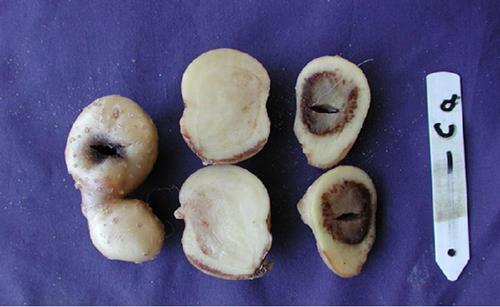
Calcium deficiency in potatoes primarily causes physiological disorders such as internal browning (also called internal rust) and hollowing of tubers, which reduce tuber quality and marketability. Symptoms on the plant include necrosis and browning of the margins and tips of young leaves, twisting and deforming of young leaflets, and death of young shoot tips, flower stalks, and growing points due to calcium immobilization and its role in cell wall strength. Root growth is also impaired, resulting in browning of roots and poor nutrient uptake. Symptoms of calcium deficiency are often subtle in potato leaves because most soils have sufficient calcium for vegetative growth, but localized deficiencies in developing tubers can lead to postharvest quality losses such as bruising and rot. Calcium deficiency management involves balanced fertilization and, in some cases, foliar application or application of calcium to the soil during tuber growth to ensure adequate calcium supply to the growing tubers.
Kimat’s proposed solution:
Secondary macronutrient deficiency – sulfur (S)
Sulfur deficiency in potatoes primarily manifests as pale green to yellow leaves, often starting with younger leaves that are smaller and stunted. The yellowing is relatively uniform (chlorosis) and may include purple discoloration on the stems, leaf petioles, and margins, and the veins are often lighter in color than the leaf blade. This deficiency can be confused with nitrogen deficiency, but unlike nitrogen, sulfur is less mobile in the plant, so symptoms appear first in young leaves rather than older leaves. Advanced deficiency may cause leaf curling, stunted growth, and reduced dry matter accumulation in tubers, negatively affecting overall yield and tuber quality. Sulfur deficiency is more common in acidic, sandy, or low-organic-matter soils and can be exacerbated by factors that reduce sulfur availability.

Kimat’s proposed solution:
Micro-element deficiency – Fe (iron)
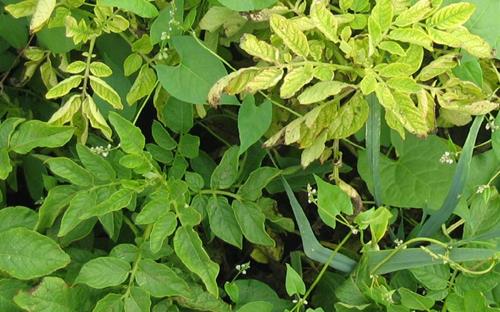
Iron deficiency in potatoes is characterized by interveinal chlorosis, which primarily affects the youngest leaves, where the leaf blades turn pale yellow or white while the veins remain distinctly green. This chlorosis results from impaired chlorophyll formation due to a lack of iron, an essential micronutrient for photosynthesis and energy production. In cases of severe deficiency, young leaves may turn almost completely white and growing points can die. Stunted growth and reduced plant vigor are common, especially in calcareous or high pH soils where iron availability is limited. Iron deficiency symptoms are more noticeable in bright sunlight and can be confused with other nutrient deficiencies, but are recognizable by the chlorosis pattern on young leaves and green veins.
Kimat’s proposed solution:
Micro-element deficiency – Mn (manganese)
Manganese deficiency in potatoes usually appears on younger, upper leaves as interveinal chlorosis, in which the areas between the veins turn yellow but the veins remain green. Small black or brown spots develop mainly along the veins, and the leaves may appear dull green with localized dead tissue. Affected leaves are smaller, yellow, and may have brown margins, with symptoms often more prominent in high pH soils or well-aerated soils that are low in manganese. This deficiency can be confused with diseases such as late blight, but differs in the pattern of symptoms and the absence of odor. Manganese is essential for photosynthesis and metabolic activation, so its deficiency reduces plant vigor, growth, and yield.

Kimat’s proposed solution:
Micronutrient deficiency – Zn (zinc)
Zinc deficiency in potatoes causes stunted and stunted plants with malformed leaves that fold inward, often described as “fern leaf” symptoms. Younger leaves develop interveinal chlorosis and necrotic spots with whitish patches in brown necrotic tissue. Leaves become narrow and cupped upwards, and grayish-brown to bronze spots appear that start in the middle of the leaves and spread outward. This deficiency impairs chlorophyll production and stunts shoot growth by reducing the production of vital growth regulators and enzymes. Zinc deficiency is common in sandy or high pH soils and can be worsened by high phosphorus fertilization and requires soil or foliar zinc applications to correct.

Kimat’s proposed solution:
Deficiency of microelements – Cu (copper)
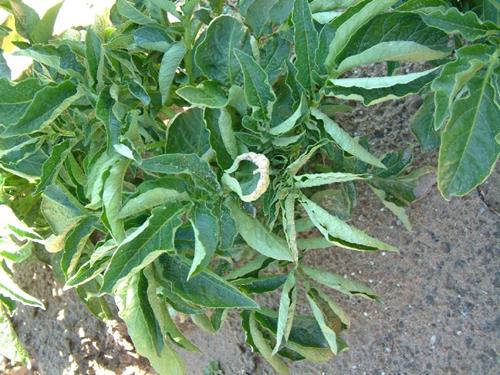
Copper deficiency in potatoes is usually not very pronounced, but when it occurs, symptoms include wilting and curling of young leaves inwards, drying or dying of the tips and margins of leaves without obvious chlorosis. New leaves may be smaller and misshapen with curled margins, and stems often appear thin. Copper deficiency can also cause darkening of the veins in young leaves and necrotic spots on the leaves, sometimes progressing to necrosis of the tuber tip, which affects tuber quality. Root death and reduced tuber production can result from severe deficiency. This deficiency usually occurs in high pH or organic soils where copper availability is limited. Copper plays an important role in photosynthesis, enzyme activation and lignin formation, so its deficiency reduces plant vigor and increases susceptibility to disease.
Kimat’s proposed solution: