



Nutrient deficiencies in celery are of great importance because they directly affect the quality, yield, and marketability of the crop. Impaired nutrient uptake can reduce celery quality and can occur during periods of rapid growth or under environmental stress conditions such as moisture fluctuations. Calcium is critical for healthy cell growth, and its deficiency can damage the structural integrity of the plant, reduce plant vigor, and decompose tissue. Deficiencies in other nutrients, such as nitrogen or boron, may also cause yellowing of leaves, stunted growth, and reduced stem growth, which in turn can lead to reduced crop yield. Because celery has a small root system and inefficient nutrient uptake, it requires fertile, well-drained soil with adequate organic matter and a continuous supply of nutrients to prevent these deficiencies. Correcting nutrient deficiencies in celery is essential to maintaining plant health and maximizing production success.
Macro-N (nitrogen) deficiency
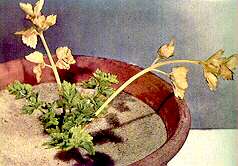
Nitrogen deficiency in celery causes yellowing of older leaves, which progresses to younger leaves. This deficiency causes reduced plant growth, shortened stems, and overall reduced production. In severe cases, leaves may turn white and eventually die. Celery has a high demand for nitrogen, and a lack of it will cause the plant to become pale and weak, producing a lower quality crop and lower yield. To compensate, nitrogen fertilizer is usually given to the plant in divided doses throughout the growing season. However, excessive use of nitrogen can lead to problems such as excessive growth and damage to the plant, and too much nitrogen in the soil can be washed away by rainfall. However, excessive use can cause toxicity and environmental problems, so balanced management is key.
Kimat’s proposed solution:
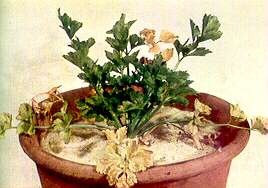
Macro-P (phosphorus) deficiency
Phosphorus deficiency in celery primarily causes stunted growth with smaller, darker green leaves and shortened plant height. Older leaves may show some yellowing and premature senescence similar to nitrogen deficiency, but more specifically, phosphorus deficiency often results in poor root development and an imbalance between shoot and root growth. In some cases, purplish or reddish discoloration can appear on older leaves, especially in cool conditions that limit phosphorus uptake. This deficiency limits overall plant vigor and causes celery plants to be weak, have fewer leaves, and have reduced quality. Phosphorus deficiency is more common in cold, heavy clay, or high pH soils where root uptake is impaired. Without phosphorus, celery growth slows significantly and in severe cases, plants may die.
Kimat’s proposed solution:
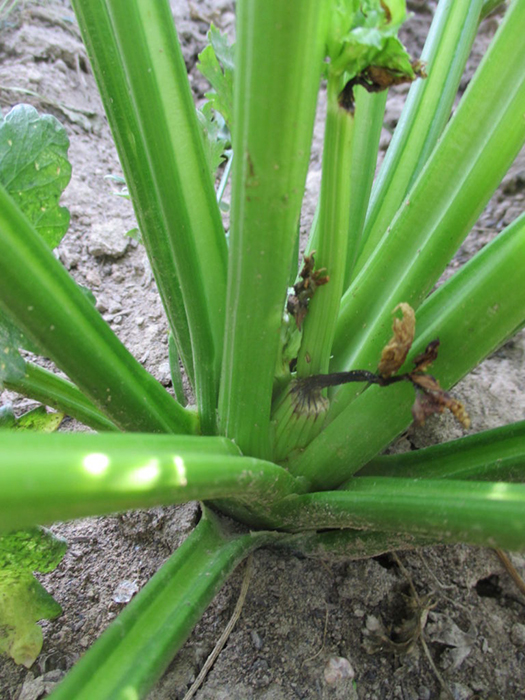
Secondary macronutrient deficiency – Calcium (Ca)
Calcium deficiency in celery causes a physiological disorder characterized by the blackening and death of young leaf tissues, “stem blackening,” in the center of the plant. The deficiency primarily affects rapidly growing tissues and young leaves, which become stunted, twisted, necrotic, and eventually die. The disorder most often occurs during periods of rapid growth under warm temperatures, high fertilization, or variable soil moisture conditions. Calcium deficiency results in poor cell development and structural weakness, leading to loss of quality and reduced yield. Prevention includes ensuring consistent soil moisture, avoiding overfertilization, and applying calcium via soil amendment or foliar spray to the growing point to maintain healthy celery growth.
Kimat’s proposed solution:
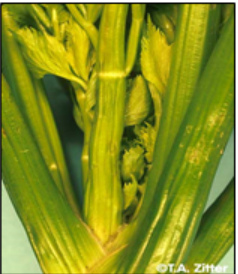
Micro-B (boron) deficiency
Boron deficiency in celery typically causes brittle stems with brown streaks on the epidermis above the vascular bundles of the petioles and transverse cracks on the outer surface of the stem. The damaged tissue may curl outward, giving the petioles a hairy appearance, and the younger inner leaves can turn black and rot. This deficiency often appears during rapid growth stages in hot weather conditions and can cause stem cracking, known as “black streaking.” Boron deficiency is critical because boron is essential for cell wall formation, cell division, and overall plant growth. Soil conditions such as high pH, drought, or heavy rainfall that leads to leaching can exacerbate boron deficiency in celery.
Kimat’s proposed solution: