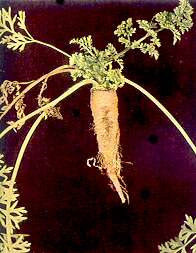




Nutrient deficiencies in carrots are of great importance because they significantly reduce yield, size, and quality of roots, leading to increased unmarketable yields and economic losses for farmers. Deficiencies in key nutrients such as nitrogen, phosphorus, potassium, and micronutrients impair root growth, photosynthesis, and overall plant vigor, compromising both the quantity and marketability of carrots. Balanced nutrient supply is critical for optimizing edible root weight, diameter, and length, and directly impacts economic returns, net income, and cost-benefit ratios in carrot production. Proper nutrient management, including adequate fertilization of potassium and micronutrients such as zinc, has been shown to significantly increase carrot yield and improve profitability for farmers.
Macro-N (nitrogen) deficiency
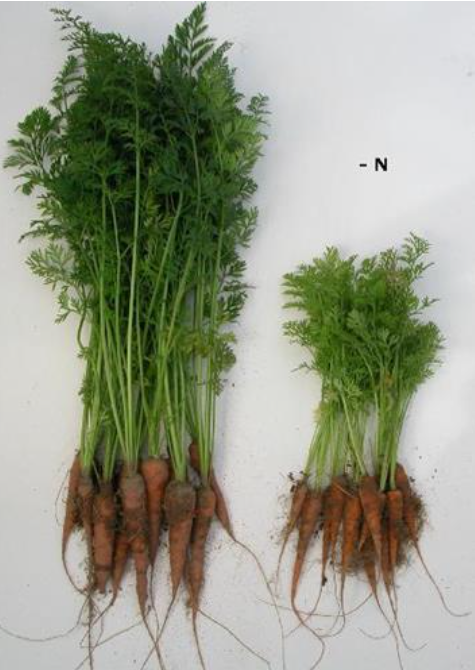
Nitrogen deficiency in carrots causes stunted growth and a change in the light green color of the entire foliage, with older leaves often turning yellow, combined with a red tinge on the leaflets and leaf tips. Affected plants have smaller, weaker leaves, and root growth is severely restricted, leading to reduced yield and poor root quality. This deficiency often appears close to harvest or in sandy soils where nitrogen is easily leached. Symptoms can be confused with environmental stresses such as cold, drought, or root damage, but nitrogen deficiency specifically causes a uniform pale green color and slow growth.
Kimat’s proposed solution:
Macro-P (phosphorus) deficiency
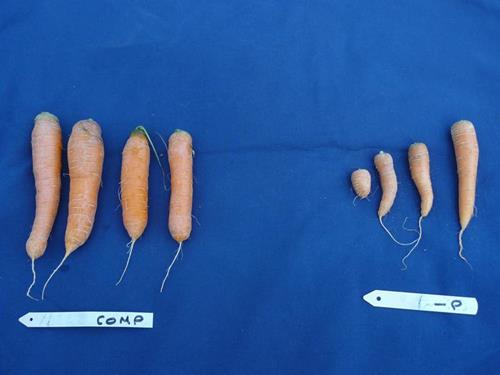
Phosphorus deficiency in carrots is rare, but results in stunted growth and poor root development, with visible symptoms including purple or red discoloration of older leaves, especially along the margins, without yellowing. This deficiency is usually associated with acidic, calcareous or cool, wet soils that limit phosphorus availability. In affected plants, roots become smaller and less developed, and overall top growth is reduced, which can delay maturity and reduce yield and quality. Similar symptoms may be caused by low temperatures, drought or pests such as carrot fly, so careful diagnosis, including leaf analysis, is recommended.
Kimat’s proposed solution:
Macro-K (Potassium) deficiency
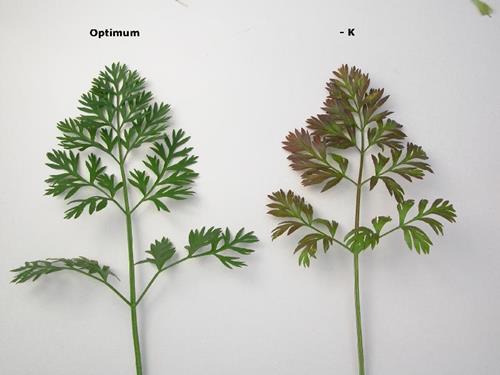
Potassium deficiency in carrots begins with a reddish discoloration of the margins of older leaves, followed by interveinal chlorosis, pallor, and eventually wilting of these leaves; as the condition progresses, scorched, yellow-brown edges may develop, and advanced cases can cause petioles to appear water-scalded before drying and collapsing, overall plant growth is stunted, and roots are less robust, often making diagnosis difficult due to the similarity to drought or pest damage.
Kimat’s proposed solution:
Secondary macronutrient deficiency – Magnesium (Mg)
Magnesium deficiency in carrots usually first appears in older leaves as interveinal chlorosis, in which the area between the veins turns yellow while the main veins themselves remain green; with severe deficiency, the chlorosis becomes whitish and the tips of the leaves may take on a purple hue; in more severe cases, a bright yellow-orange or red discoloration develops at the edges and sometimes necrotic (dead) spots develop at the margins of the leaves, ultimately leading to impaired photosynthesis, reduced growth and reduced yield, especially in sandy and acidic soils or where high potassium has been applied.

Kimat’s proposed solution:
Secondary macronutrient deficiency – Calcium (Ca)
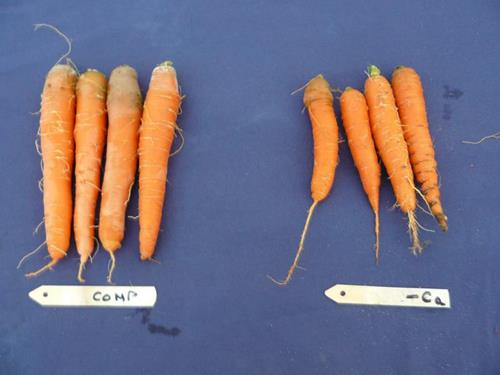
Calcium deficiency in carrots primarily affects root quality and is a key factor in the development of disorders such as pitting, which is characterized by small lesions on carrot roots, leading to reduced marketability and crop loss. This deficiency causes cell walls to break down, weakening the tissue and making carrots more susceptible to infection by pathogens such as Pythium, which exploit calcium-deficient cells. Common symptoms include reduced root size, stunted growth and localized tissue collapse in carrots, although overall plant calcium deficiency is often localized and not widespread. Prevention and management strategies include ensuring adequate calcium availability and uptake, particularly through targeted fertilization, which has shown benefits in reducing pitting without increasing soil pH. Environmental factors such as water status, temperature and root maturity also significantly affect calcium transport and uptake in carrots and influence the severity of deficiency symptoms.
Kimat’s proposed solution:
Micro-B (boron) deficiency
Boron deficiency in carrots causes several distinct symptoms above and below ground. Boron deficiency in roots typically results in superficial, pinhead-sized discoloration just beneath the skin, visible after peeling. More severe deficiencies cause splitting and brittleness in the main roots. In leaves, older leaves may turn yellow or red, and the growing leaf tips may eventually die off, resulting in smaller leaves. Roots can also show symptoms such as cracks, pitting in the core, and dark discoloration. Boron deficiency prevents proper cell wall development and growth, affecting overall root quality and function. This deficiency typically occurs in sandy, alkaline, or washed soils where boron availability is low, especially in dry conditions.