


Macro-N (nitrogen) deficiency
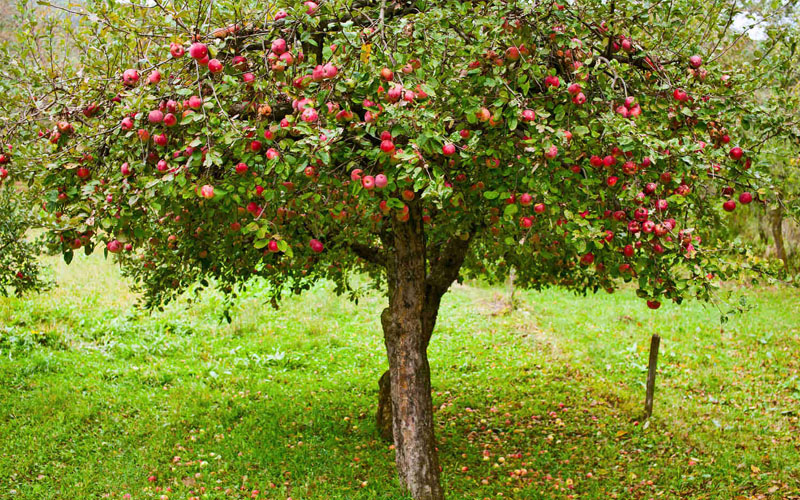
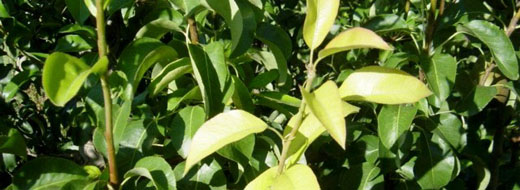
Nitrogen deficiency in apple trees reduces growth, production, and fruit quality. Lower leaves turn light green to yellow, and new leaves are small and thin, while older leaves may turn orange, red, or purple and drop prematurely. Branch growth is stunted and short, and fruits are smaller, with premature discoloration and early drop. This problem is often caused by nutrient deficiencies in the soil, sandy soils after heavy rain, or poor orchard management. Nitrogen needs are greatest during periods of vigorous growth, and concentrations of less than 1.5% in leaves indicate deficiency. Management involves balanced nitrogen fertilization, especially early in the season, and avoiding over- or late-term applications to maintain healthy tree growth, good fruit set, and desirable crop quality.
Kimat’s proposed solution:
Macro-P (phosphorus) deficiency
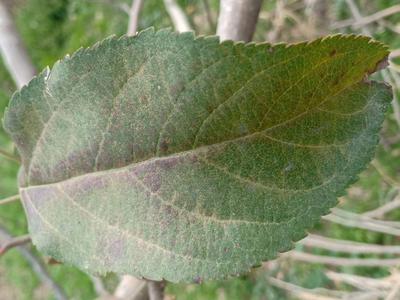
Phosphorus deficiency in apple trees is less common than nitrogen deficiency, but it can negatively affect tree growth, bud development, and fruit quality. When phosphorus is low, apple trees often exhibit thin, weak branches with fewer lateral branches. Leaves may appear dull, dark green, or show bronze or brownish-purple tinges, especially on older foliage, sometimes extending from the lower leaves to the upper ones. Other common symptoms include poor growth, reduced budding, flowering, and fruiting. Severe phosphorus deficiency in apples can inhibit flowering and fruit formation, and in severe cases, cause younger leaves to curl upward, which then affects older leaves, making them lighter green and rough to the touch. Fruit may also ripen prematurely and be of poor quality. Visual symptoms are more likely to appear in young trees growing in very poor soils. Mature apple trees rarely show obvious symptoms due to the mobility of phosphorus within the plant, but younger trees can benefit from phosphorus fertilizer in their early years of growth.
 |
 |
Kimat’s proposed solution:
Macro-K (Potassium) deficiency
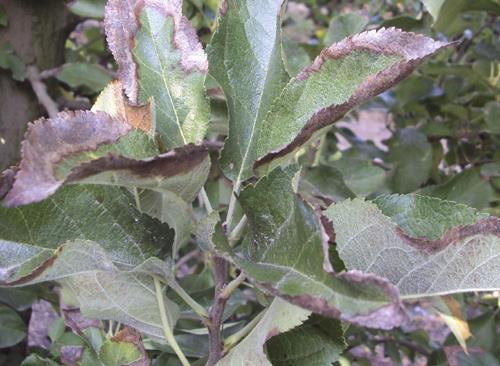
Potassium deficiency in apple trees usually manifests with symptoms that first appear on older leaves due to the movement of potassium through the plant. The edges of these older leaves often turn yellow, progressing to browning, scorching, and curling, and sometimes the leaves curl inward, forming a boat shape. The margins may initially be bright green and then become necrotic, and this necrosis can extend down to the midrib of the leaf. Leaves may also show interveinal chlorosis (yellowing between the veins), and purple or reddish spots may appear on the undersides of the leaves. Apple trees with potassium deficiency often show slow growth of new shoots and weak branches, with poor overall growth and reduced fruit quality – the fruit may be slightly acidic or woody. This deficiency also weakens the tree’s resistance to drought, cold, and pests, and can make the tree more susceptible to cold damage and disease. Potassium is critical for thickening new branches, strengthening the trunk, improving drought and cold tolerance, and increasing fruit yield and quality. In apples, a leaf potassium level of less than approximately 0.8% to 1.0% indicates a deficiency. Potassium deficiency is more likely in sandy or low-clay soils, where excessive lime is applied, or when environmental conditions such as insufficient sunlight or excessively wet soils prevail.
Kimat’s proposed solution:
Secondary macronutrient deficiency – Magnesium (Mg)
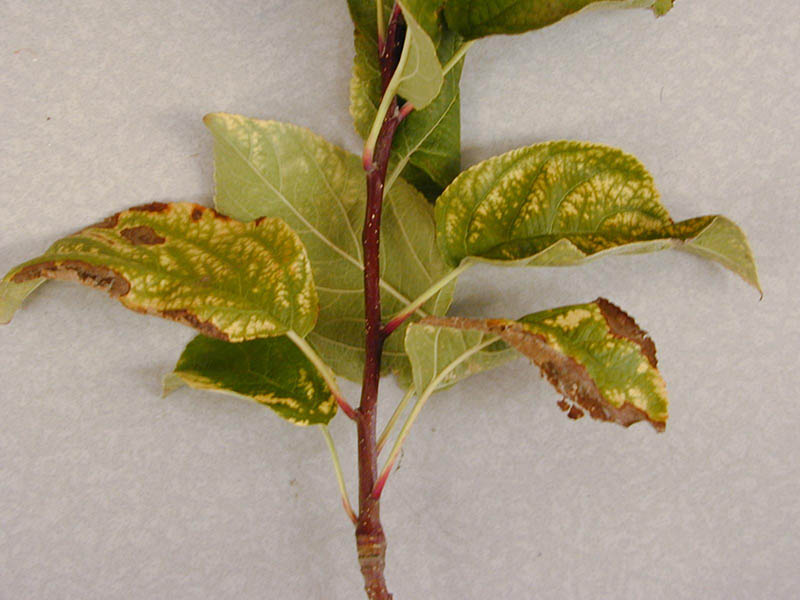
Magnesium deficiency in apple trees usually appears first on older leaves and is characterized by chlorosis (yellowing) between the main veins, creating a distinctive “stripe” or interveinal pattern. This yellowing may progress to necrosis (dead tissue) and cause brown or tan spots along the leaf veins while the leaf margins often remain green. As the deficiency worsens, the leaves may develop a marginal burn similar to potassium deficiency but located further inward. Severely deficient trees may experience premature leaf drop and fruit may not mature properly or drop prematurely. Magnesium deficiency is affected by soil conditions such as magnesium deficiency, high potassium levels, or low phosphorus, which can interfere with magnesium uptake. This deficiency is more common in sandy or light, poorly drained soils.
Kimat’s proposed solution:
Secondary macronutrient deficiency – Calcium (Ca)
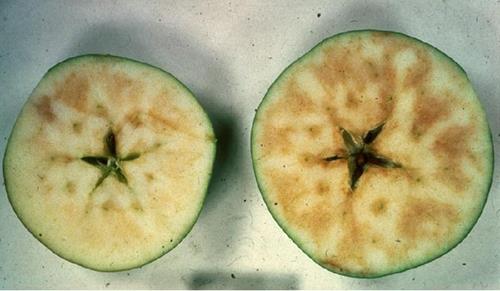
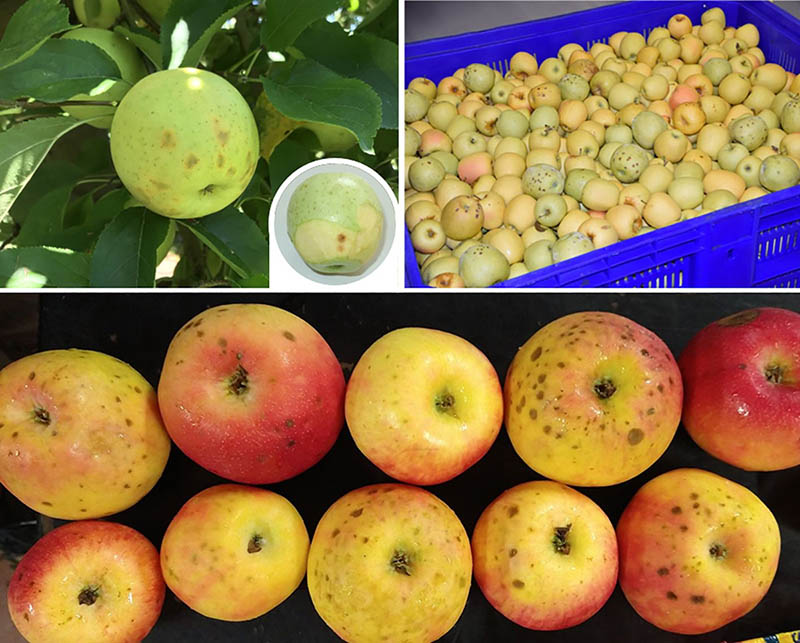
Calcium deficiency in apples primarily causes a physiological disorder called (bitter spot) that appears as small, dark, sunken, and sunken spots on the skin of the apple, often concentrated near the bottom of the fruit bowl. These spots correspond to small, brown, corky areas within the flesh of the apple. Symptoms of bitter fruit usually appear a few weeks before harvest or during storage. This disorder is caused by a localized deficiency of calcium in the fruit, which leads to the breakdown of cell membranes and cell walls, compromising the firmness and quality of the fruit. Symptoms of calcium deficiency do not usually appear on the leaves, but develop on the fruit as it matures. Factors that exacerbate calcium deficiency include acidic, sandy, or light soils that leach calcium, drought stress, high levels of nitrogen or potassium in the fruit or soil that interfere with calcium uptake.
Kimat’s proposed solution:
Secondary macronutrient deficiency – sulfur (S)
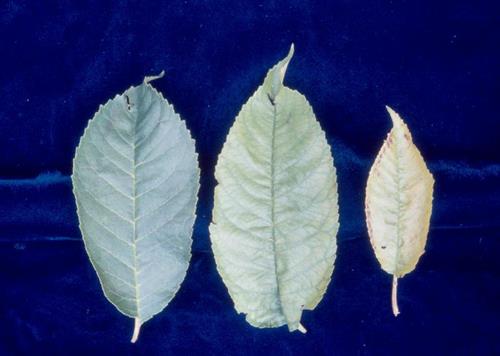
Sulfur deficiency in apples typically results in reduced leaf growth, leaves turning pale green or yellow, and sometimes yellow spots develop near the leaf margins. Symptoms usually begin on younger leaves and can be confused with nitrogen deficiency, which instead affects older leaves. Poor growth and uniform yellowing of leaves are common symptoms. Adequate sulfur is important for healthy new growth, optimal fruit number and size, and overall yield. Treatments include the use of sulfur-containing fertilizers and soil amendments to restore nutrient levels.
Kimat’s proposed solution:
Micro-element deficiency – Mn (manganese)
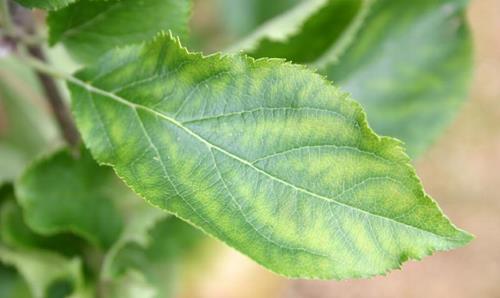
Manganese deficiency in apple is characterized by interveinal yellowing of young leaves, often in a mosaic pattern, especially in alkaline, sandy or organic soils. This deficiency can stunt growth, cause premature leaf drop, and reduce fruit quality and yield. The best way to manage this deficiency is to lower soil pH and use foliar applications of manganese sulfate, with early detection and treatment being critical for healthy trees and optimal productivity.
Kimat’s proposed solution:
Micro-element deficiency – Fe (iron)
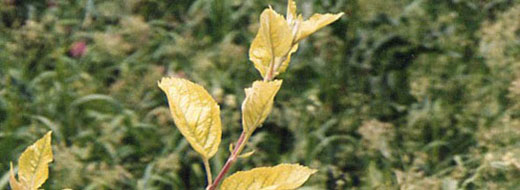
Iron deficiency in apples is most evident as interveinal chlorosis (yellowing), in which the youngest leaves turn yellow between the veins while the main veins remain green. As the deficiency progresses, the entire leaf can turn a pale yellow, and in severe cases, necrotic spots or burns appear along the leaf margins. This condition is more common in apples grown in alkaline soils or poorly aerated conditions, as high pH makes iron unavailable to the roots, regardless of its abundance in the soil. Iron deficiency impairs chlorophyll production, reduces photosynthesis, and overall tree vigor.
Kimat’s proposed solution:
Micronutrient deficiency – Zn (zinc)
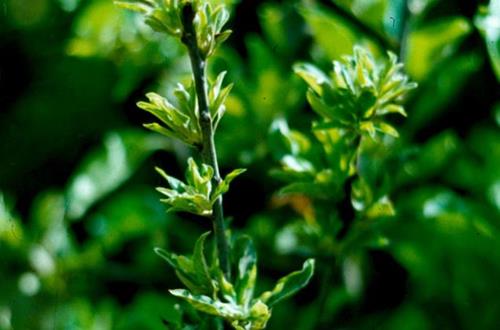
Zinc deficiency in apples manifests itself primarily in spring as symptoms of “small leaf”: young leaves are short, abnormally narrow, and clustered at the tips of branches, often accompanied by interveinal chlorosis and brown spots of dead tissue. Branches grow slowly, internodes are shortened, and branches may show sparse foliage and dieback. Severely affected trees may produce small, misshapen fruit and poor fruit color. This disorder is more common in alkaline soils and soils rich in iron or phosphorus, as these conditions limit zinc availability.
Kimat’s proposed solution:
Micro-B (boron) deficiency
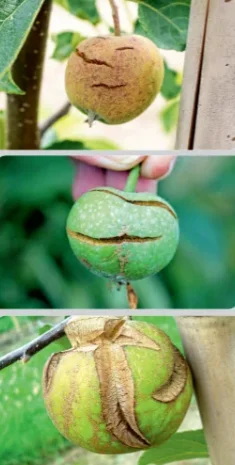
Boron deficiency in apples causes a wide range of symptoms, primarily affecting fruit quality and tree growth. Fruits typically develop small, watery, corky or brown lesions in the flesh that may dry out and develop spongy areas. The fruits can be small, misshapen and cracked, often with rough and heavily rusted skin. Severe deficiencies result in poor flower formation and “bloom blast”, in which the flowers shrivel and die. Boron deficiency on the tree also causes terminal bud death, shortened internodes, brittle and thickened leaves. This deficiency can affect the movement of calcium in the tree, reducing fruit size, causing premature fruit drop and increasing apple bitterness. Boron deficiency symptoms often resemble those of calcium deficiency but appear earlier in the fruit’s development.