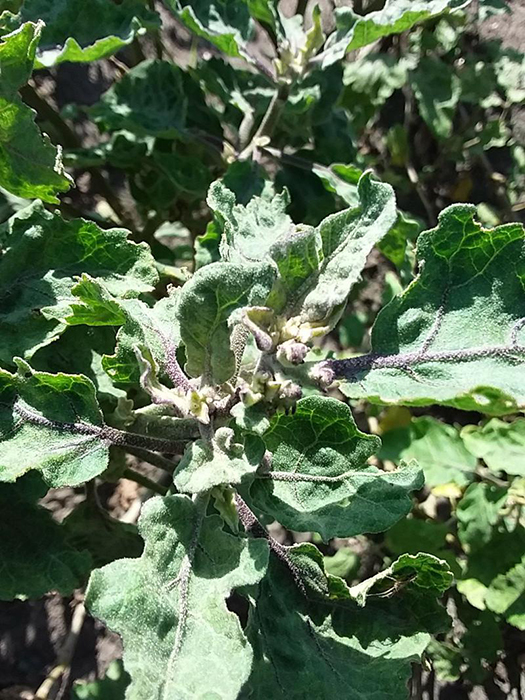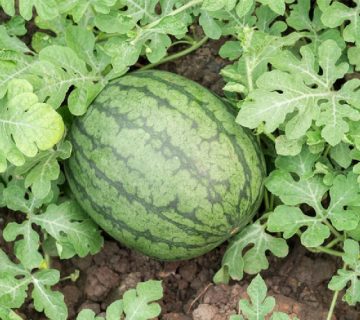



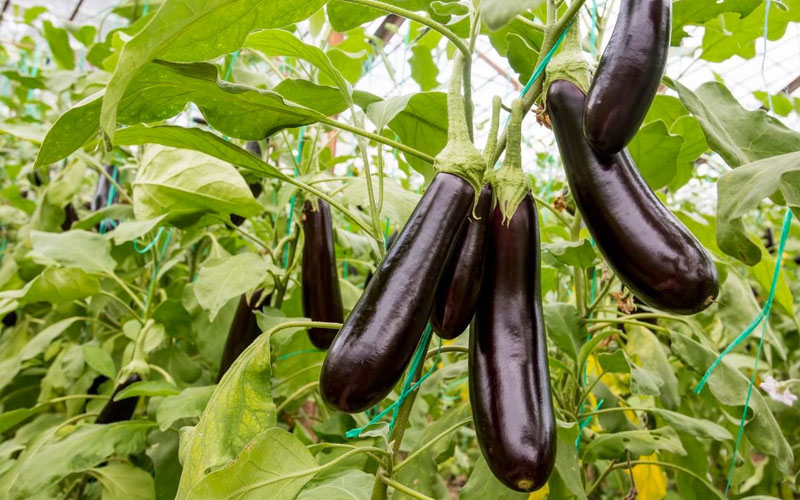
Nutrient management is a critical aspect of eggplant cultivation as eggplants require a high and consistent supply of nutrients, particularly nitrogen, phosphorus and potassium, to support rapid growth and sustained fruit production. Proper nutrient management increases yield, fruit size and quality by increasing photosynthesis, root development and nutrient uptake efficiency. It also improves soil health by increasing nutrient availability and microbial activity. Integrated nutrient management, by combining organic and mineral resources, helps maintain soil fertility and ensures a balanced supply of nutrients, leading to higher economic returns and sustainable production. Without adequate nutrient management, eggplants suffer from stunted growth, poor fruit development and reduced resistance to environmental stresses, ultimately limiting crop profitability and success.
Macro-N (nitrogen) deficiency
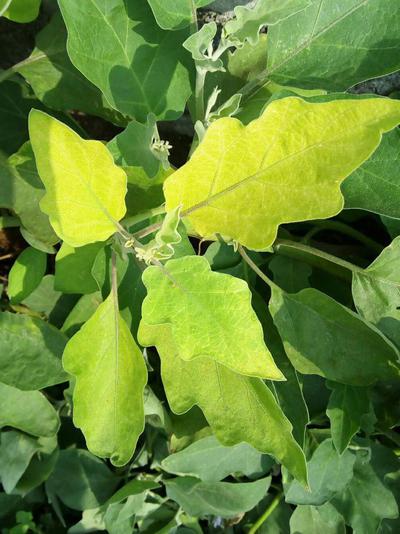
Nitrogen deficiency in eggplant causes symptoms such as short, slender growth, pale yellow leaves starting on older foliage, sometimes with pink or purple undertones, and reduced leaf size and number. This deficiency limits chlorophyll production, leading to chlorosis and poor photosynthesis, which subsequently leads to poor flowering, fruit formation, and poor yield. In addition, nitrogen deficiency affects the uptake and efficiency of use of other essential nutrients such as phosphorus, potassium, calcium, magnesium, and sulfur, causing a wider nutritional imbalance. If not addressed promptly, low nitrogen deficiency results in weak plants with significantly reduced growth and productivity.
Kimat’s proposed solution:
Macro-P (phosphorus) deficiency
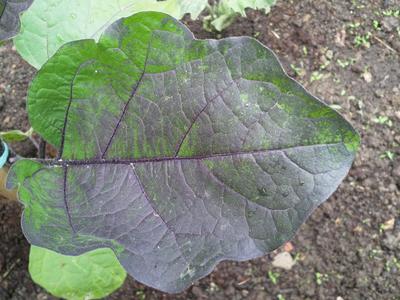
Phosphorus deficiency in eggplant mainly manifests as stunted growth with small leaves and delayed maturation. Older leaves often turn dark green to blue and sometimes red-purple or purple due to the accumulation of anthocyanins. This deficiency can cause leaves to curl, become deformed and show purple streaks or blackish spots, especially on leaf petioles and stems. Root growth is generally poor and an increased root-to-stem ratio is often observed as the plant diverts resources to root development. Phosphorus is essential for energy transfer, photosynthesis, root development, flowering and seed production, so its deficiency significantly limits eggplant growth, fruit formation and overall yield.
Kimat’s proposed solution:
Macro-K (Potassium) deficiency
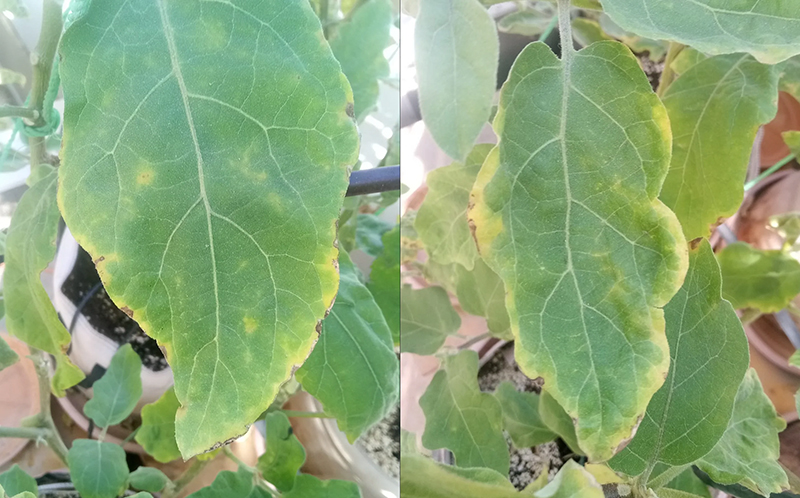
Potassium deficiency in eggplant is characterized by yellowing and scorching along the margins of the leaves, commonly called yellowing or leaf margin scorch, and usually appears first on older leaves. As the deficiency progresses, these margins may turn brown and dry, and the leaves may curl or curl. The plant may also exhibit stunted growth, weak stems, reduced root growth, and reduced fruit size and yield. Potassium is key for water regulation, enzyme activation, protein synthesis, and disease resistance, so a deficiency makes eggplants more vulnerable to stress and reduces overall plant vigor and productivity.
Kimat’s proposed solution:
Secondary macronutrient deficiency – Magnesium (Mg)
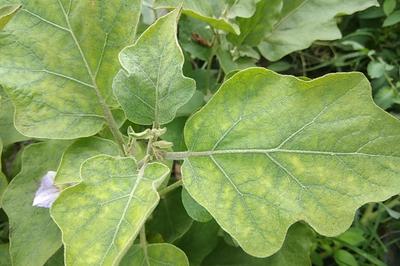
Magnesium deficiency in eggplant usually first appears as interveinal chlorosis – yellowing between the veins – in older leaves, while the veins themselves remain green; as the deficiency progresses, brown spots may develop, leaves may curl, growth may stop, and severe cases may lead to premature leaf drop and reduced yield, all due to magnesium’s essential role in the formation of chlorophyll and photosynthetic enzymes, and this condition is often caused by sandy or acidic soils, over-irrigation, or competition with high levels of potassium or calcium.
Kimat’s proposed solution:
Secondary macronutrient deficiency – Calcium (Ca)
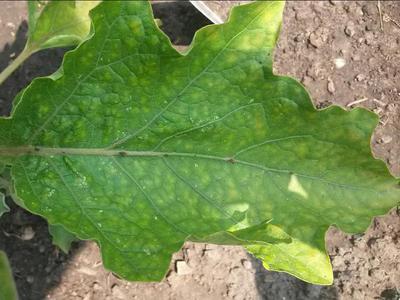
Calcium deficiency in eggplant usually results in blossom end rot, which appears as water-soaked, bronze spots at the end of the fruit blossom that eventually turn dark, dry, and leathery, ultimately reducing fruit quality and yield. The deficiency also causes stunted new growth, scorched young leaf tips, and stunted root growth, symptoms of which are usually caused by fluctuating soil moisture, drought stress, high soil salinity, or excessive use of nitrogen or potassium fertilizers, all of which limit calcium uptake by the plant.
Kimat’s proposed solution:
Secondary macronutrient deficiency – sulfur (S)
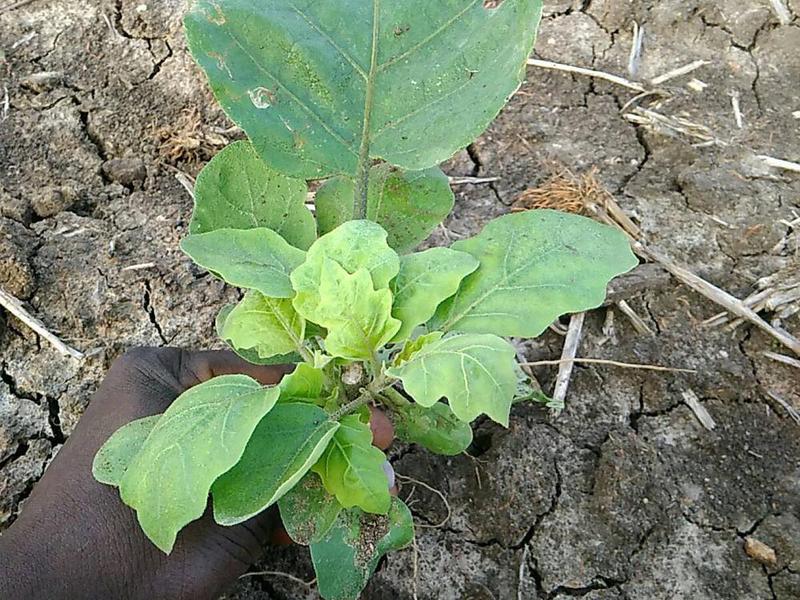
Sulfur deficiency in eggplant is characterized by uniform yellowing (chlorosis) of younger leaves, as sulfur is immobile in the plant. This begins at the tips and margins of the leaves and often results in stunting, thinning of stems, and reduced leaf and fruit size, and in severe cases results in poor flowering, reduced fruit quality, and overall reduced yield, while the condition may also impair the absorption and utilization of other nutrients, particularly nitrogen and potassium. Sulfur deficiency in eggplant causes uniform yellowing of younger leaves, beginning at the tips and margins of the leaves, and can result in stunting, thinning of stems, smaller leaves and fruit, and reduced flowering and yield. This nutrient deficiency affects amino acid and protein synthesis, often caused by depleted soils, heavy fertilization without sulfur, or excessive rain washout, and can also impair the plant’s ability to absorb and utilize other nutrients, such as nitrogen.
Kimat’s proposed solution:
Micro-element deficiency – Fe (iron)
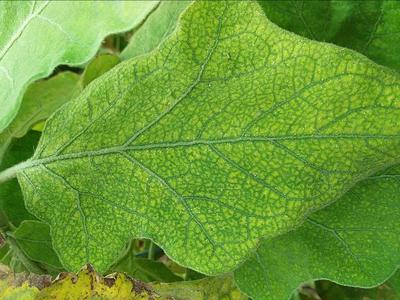
Iron deficiency in eggplant is primarily seen as interveinal chlorosis – yellowing between the veins – in the youngest leaves, while older foliage remains green. In more severe cases, leaf growth stops, overall growth slows, and yield is reduced, as iron is essential for chlorophyll synthesis and enzyme function. Symptoms are often exacerbated by high soil pH, excess calcium, or waterlogging, and management typically involves foliar iron sprays or improving root zone conditions to increase iron uptake.
Kimat’s proposed solution:
Micronutrient deficiency – Zn (zinc)
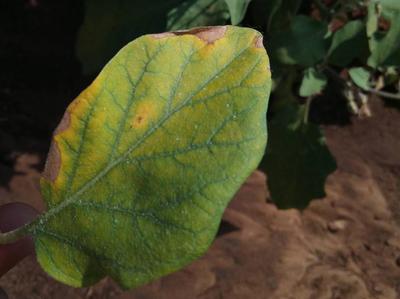
Zinc deficiency in eggplant causes symptoms such as yellowing of leaves often accompanied by interveinal chlorosis, leaf deformation including narrower or wavy margins, stunted growth, and reduced internode length, resulting in clustered or rosette-like leaves; brown or tan spots may develop on the leaves, and new leaves are often smaller than normal size. This deficiency usually occurs in alkaline, sandy, or phosphorus-rich soils where zinc availability is limited, and can be exacerbated by poor root health or overwatering.
Kimat’s proposed solution:
Micro-B (boron) deficiency
Boron deficiency in eggplant causes stunted growth and deformation, especially at the tip of the plant, with symptoms including twisting or curling of new leaves, death of growing points, and weak or brittle stems; it can also reduce flowering and fruit formation, sometimes resulting in misshapen fruit, as boron is crucial for cell wall formation, pollen development, and sugar transport, and its deficiency often occurs in sandy or alkaline soils where less boron is available.