


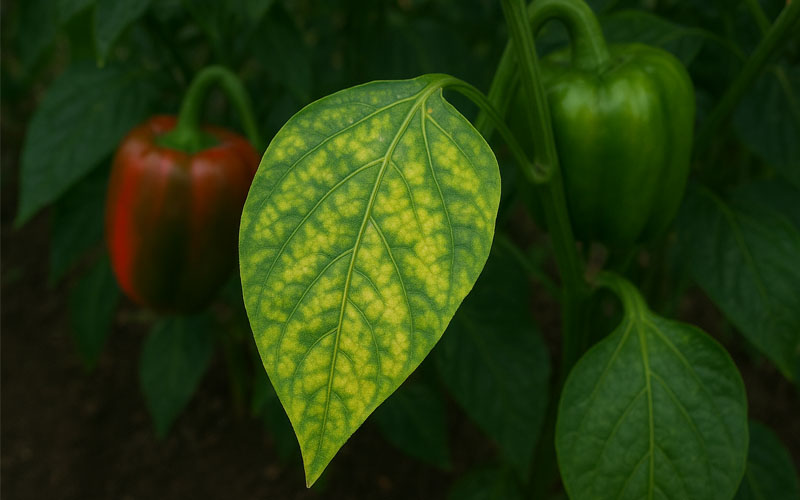
Nutrient deficiencies in bell peppers are commonly caused by factors such as irregular watering, poor soil structure, rapid vegetative growth, overuse of certain fertilizers, high temperatures, and competition between nutrients such as potassium and calcium at the roots. These factors limit the plant’s ability to absorb essential minerals – even when they are present in the soil – and lead to symptoms such as blossom end rot, leaf curling, and stunted growth. Prevention and correction of these deficiencies include maintaining consistent soil moisture through proper irrigation, balancing fertilizer applications, conducting regular soil and leaf analyses, improving soil quality with organic matter, and environmental controls to moderate stress, while foliar sprays provide a quick fix for some nutrients but are generally ineffective for calcium in the fruit.
Macro-N (nitrogen) deficiency
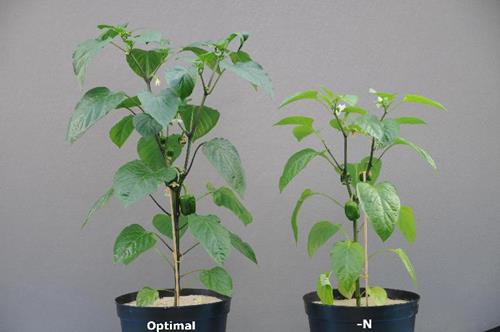
Nitrogen deficiency in bell peppers is characterized by slender, stunted plants with pale yellow leaves that begin on older foliage and spread to younger leaves, plants show poor growth, and reduced flowering or fruiting. This condition is usually caused by nitrogen leaching from the soil by irrigation or rain, inadequate fertilization, or poor soil quality, especially in sandy soils and after excessive use of compost. Correction of nitrogen deficiency involves the application of nitrogen-rich fertilizers at recommended intervals.
Kimat’s proposed solution:
Macro-P (phosphorus) deficiency
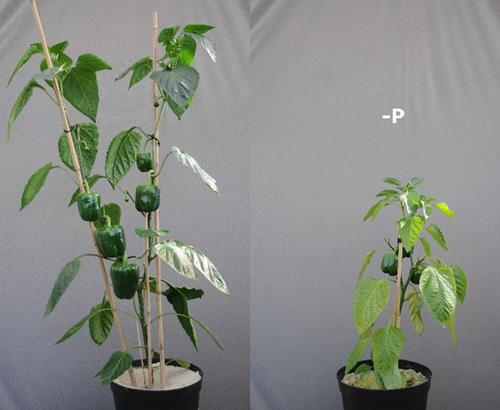
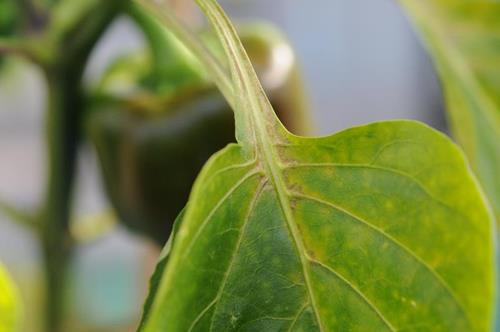
Phosphorus deficiency in bell peppers causes stunted growth, poor root development, short shoots, and numerous underdeveloped buds, leading to reduced flower and fruit production. Older leaves may show chlorosis, wilting, and sometimes a purple discoloration. At the molecular level, bell pepper roots respond to phosphorus deficiency by altering gene expression to re-transport internal phosphorus and regulating metabolic pathways and root growth to improve phosphorus uptake. This deficiency is exacerbated by soil conditions such as acidity, low organic matter, and cold or wet soils, and can reduce overall plant vigor and performance. Management of phosphorus deficiency typically involves the use of phosphorus-rich fertilizers and addressing soil conditions to optimize phosphorus availability for healthy plant growth and productivity.
 |
 |
Kimat’s proposed solution:
Macro-K (Potassium) deficiency
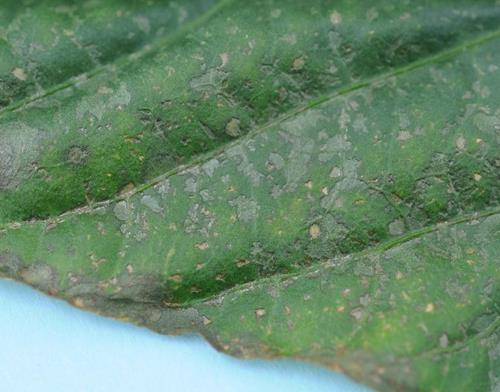
Potassium deficiency in bell peppers usually manifests as stunted growth, with plants showing smaller size and weaker leaves. Older leaves show yellowing (chlorosis) along the margins and between the veins, often accompanied by necrotic spots and scorched edges that may merge into larger dead spots. Leaves may appear wilted or curled despite their dark green color, and brown spots can also develop on the edges of the fruit. This deficiency disrupts sugar transport in the plant, leading to starch accumulation in the lower leaves, making the plant more susceptible to disease and stress. This element is critical during the flowering and fruit development stages because potassium increases carbohydrate accumulation, disease resistance, and cold tolerance. Adequate potassium nutrition helps maintain healthy growth and heavy fruit set in bell peppers.
Kimat’s proposed solution:
Secondary macronutrient deficiency – Magnesium (Mg)
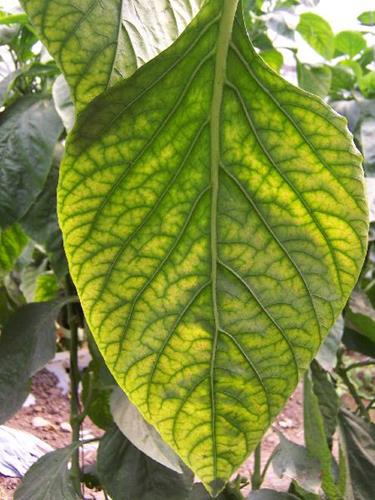
Magnesium deficiency in bell peppers primarily appears as a light yellowing (chlorosis) between the veins, while the main veins and surrounding margins remain green, and usually affects older leaves first. This interveinal chlorosis may be accompanied by scorching or necrotic spots. As the deficiency progresses, the chlorosis can spread toward the center of the leaf. Magnesium is essential for photosynthesis and healthy growth, so a deficiency can reduce plant vigor and yield. This deficiency is often worsened in sandy, acidic soils, high potassium levels, or cool, wet conditions.
Kimat’s proposed solution:
Secondary macronutrient deficiency – Calcium (Ca)
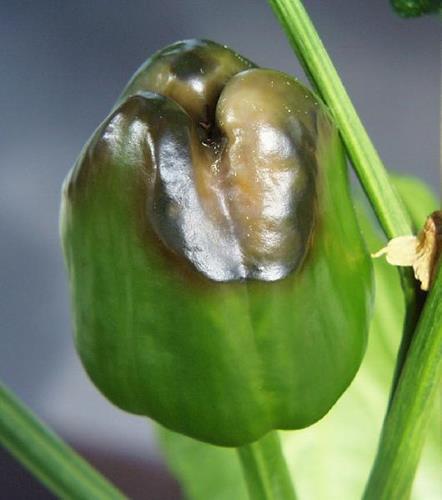
Calcium deficiency in bell peppers primarily causes a disorder called blossom end rot, which is characterized by sunken, pale green or yellow spots on the bottom (blossom end) of unripe fruits that eventually darken and may become infected with soft rot bacteria and fungi. This deficiency weakens cell walls, leading to tissue collapse and making the fruit susceptible to disease. This problem is often caused not by a lack of calcium in the soil, but by poor calcium uptake by the plant, especially during rapid fruit growth when calcium is preferentially transported to the leaves rather than the fruit. Symptoms of calcium deficiency also include black spots on the leaves, curling of younger leaves, and stunted plant growth. Factors such as irregular watering, high nitrogen levels, dry soil, and root damage can exacerbate this deficiency. Maintaining consistent soil moisture and proper fertilization are key to preventing calcium deficiency and blossom end rot in bell peppers.
Kimat’s proposed solution:
Secondary macronutrient deficiency – sulfur (S)
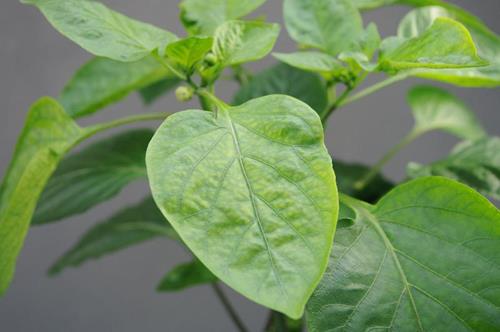
Sulfur deficiency in bell peppers primarily manifests as uniform light green chlorosis on the youngest leaves, where the leaf veins remain darker green. This often results in stunted plant growth with shorter internodes and reduced overall plant height. This deficiency disrupts sulfur metabolism and significantly affects nitrogen metabolism, leading to the accumulation of amino acids in leaves and roots and reduced carbohydrates in fruits. This can result in a deficiency of soluble carbohydrates transported from source tissues to the reservoir, ultimately reducing fruit size and quality. Symptoms of sulfur deficiency are worsened in acidic, sandy, or poorly aerated soils, and managing sulfur supply is critical for healthy growth and optimal yield in bell pepper cultivation.
Kimat’s proposed solution:
Micro-element deficiency – Fe (iron)
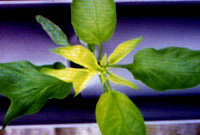
Iron deficiency in bell peppers usually causes yellowing or chlorosis of younger leaves, especially in the form of interveinal chlorosis, in which the leaf veins remain darker green while the tissue between them turns yellow. This condition results in reduced plant height and stunted growth, with the leaves appearing wilted and less firm. This deficiency is usually exacerbated by high soil pH, waterlogged or calcareous soils, and the presence of excess other metals such as copper or manganese that interfere with iron availability. Iron is essential for photosynthesis and overall plant metabolism, so a deficiency can significantly reduce early leaf growth, vigor, and yield in bell peppers. Correcting iron deficiency usually involves correcting soil pH, improving drainage, or using iron-containing fertilizers or foliar sprays to restore healthy growth.
Kimat’s proposed solution:
Micro-element deficiency – Mn (manganese)
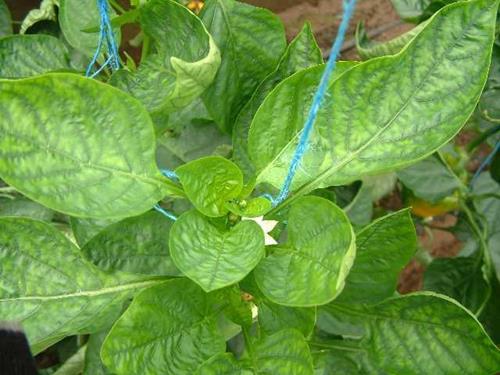
Manganese deficiency in bell peppers is characterized by yellow-green spots that appear between the leaf veins, especially at the tips of the leaves. The interveinal areas of young leaves become chlorotic while the small veins remain dark green, giving the leaves a mottled appearance. The deficiency primarily affects younger leaves and can result in reduced photosynthetic efficiency and stunted plant growth. It is important to differentiate manganese deficiency from similar symptoms caused by iron or magnesium deficiencies, which affect leaves differently in terms of age and chlorosis pattern.
Kimat’s proposed solution:
Micro-element deficiency – Mo (molybdenum)
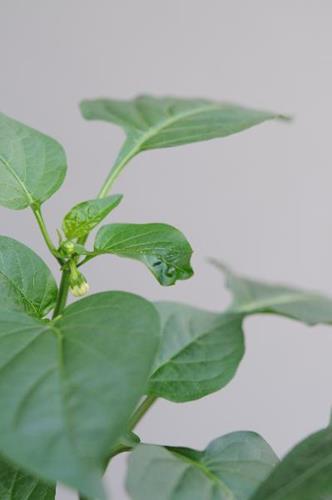
Molybdenum deficiency in bell peppers is characterized by the deformation of young leaves, which may appear misshapen and have parts of the leaf blade missing and wrinkled, but are usually undiscolored. This deficiency is exacerbated by acidic soils, low pH, and low soil organic matter levels. Molybdenum is essential for the efficient metabolism of nitrate and phosphorus in plants. Since molybdenum is only required in very small amounts, deficiency is rare, but if the pH is not optimal, it can lead to stunted growth and curling of the leaves. Typically, best uptake is at a soil pH of 6.0 to 7.0. Foliar sprays can be used to correct this deficiency if needed.
Kimat’s proposed solution:
Micro-B (boron) deficiency
Boron deficiency in bell peppers usually first appears in the leaves as loss of color, yellowing, and cupping, often affecting the upper leaves near the growing points. As the deficiency progresses, the leaves may become wrinkled or the plant may stop growing and the growing points may die. Boron is immobile in plants, meaning it cannot be transferred from older leaves to new growth, causing symptoms to appear primarily in young tissues. This nutrient is critical for root growth, cell wall stability, and proper fruit formation, and affects pepper flavor, color, and texture. Boron uptake is affected by soil pH; deficiencies often occur in alkaline, sandy, or drought-prone soils, and excess calcium can also inhibit uptake. Boron levels are managed through soil or foliar applications, particularly during the flowering and fruiting stages, to ensure healthy growth and optimal yield.
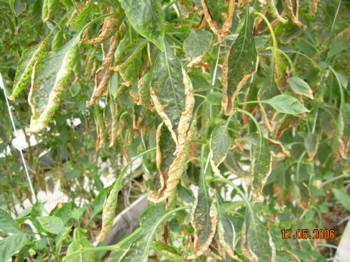
Kimat’s proposed solution:
Micronutrient deficiency – Zn (zinc)
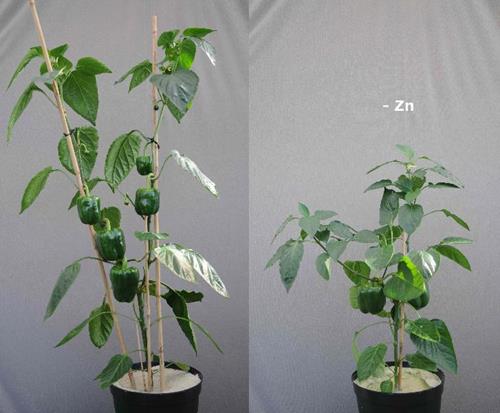
Zinc deficiency in bell peppers causes leaves to turn a light yellow color between the veins, often accompanied by necrotic brown spots. Older leaves may curl more than usual, and overall plant growth is stunted due to shortened internodes and smaller leaves. This deficiency results in a reduced number and smaller size of peppers produced. Zinc is important for various plant functions, including enzyme activation and growth regulation, so its deficiency significantly affects fruit yield and quality in bell peppers.